
Debt can be useful when managed wisely, but for students, it often becomes a trap that delays financial independence. Credit cards and loans provide convenience, yet without discipline, they can lead to stress and long‑term financial problems. Understanding how to use them responsibly is the key to staying safe.
Why Students Fall into Debt
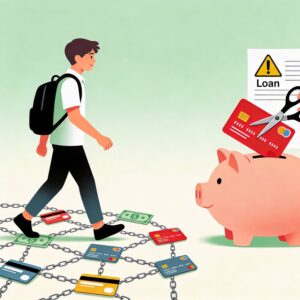
Many students are tempted by easy credit — flashy offers, “buy now, pay later” schemes, or loans for gadgets and lifestyle expenses. Without proper planning, these debts pile up quickly, leaving students struggling to repay.
Credit Cards: Handle with Care
Credit cards can help build a credit score and provide emergency funds, but misuse leads to high interest charges.
- Do’s: Pay bills on time, use cards only for planned purchases, and keep spending below 30% of your credit limit.
- Don’ts: Avoid cash withdrawals, late payments, and unnecessary swiping for non‑essentials.
Student Loans: Invest in Education, Not Lifestyle
Loans for education can be valuable investments if they lead to better career opportunities. However, borrowing for non‑essentials is risky.
- Borrow only what you truly need.
- Understand repayment terms before signing.
- Start planning repayment early, even while studying.
Smart Alternatives
- Save for purchases instead of relying on credit.
- Use debit cards or prepaid wallets to control spending.
- Explore scholarships or part‑time jobs before taking loans.
Long‑Term Impact
Debt affects not just finances but also mental health. High interest payments reduce savings and delay independence. Responsible use of credit ensures you build assets, not liabilities.
Conclusion
Credit cards and loans are tools, not traps — if used wisely. For students, the golden rule is simple: borrow only when necessary, repay on time, and never let debt control your life. Financial independence begins with smart choices today.